This story is part of the spring 2026 edition of the Saint John’s Magazine, which is in mailboxes now.
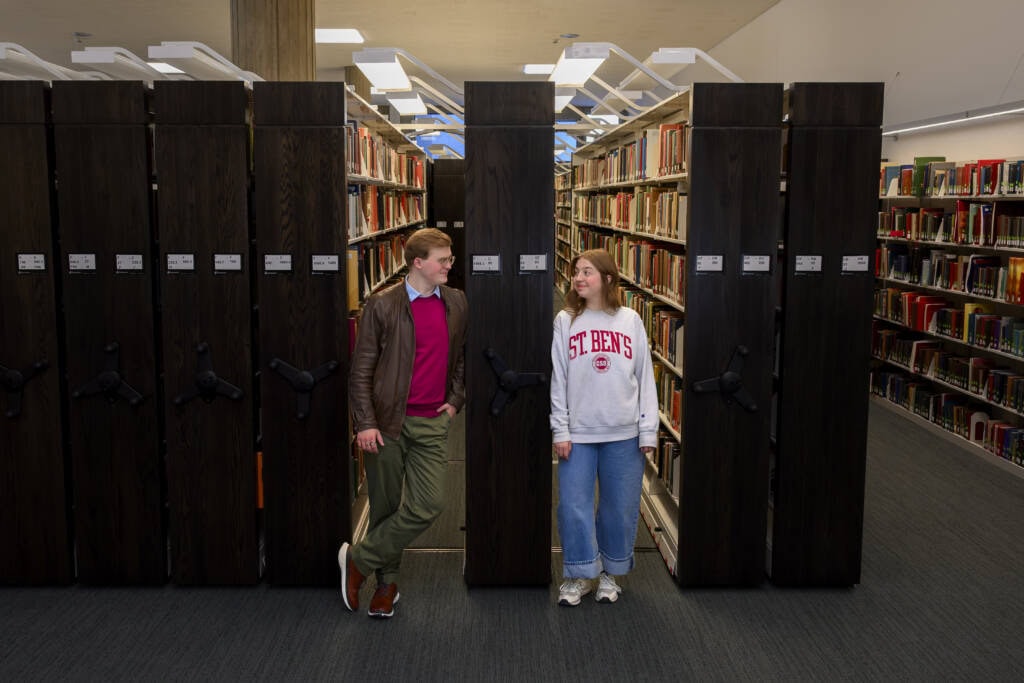
Growing up, Charlotte Whiting ’27 had a front-row seat to the rich tradition in the humanities that has always been a foundational pillar at Saint John’s University and the College of Saint Benedict.
Her mother, Heidi Westendorp Whiting, is a 1990 CSB graduate who returned in 2016 to pursue her master’s degree at the Saint John’s School of Theology and Seminary.
“We’d come down to campus a lot and I got a real introduction to the tradition and culture of these places,” said Whiting, a graduate of Sacred Heart High School in East Grand Forks and a current CSB junior majoring in political science with a minor in ancient Mediterranean studies.
“I saw how beautiful the campuses looked in the summer. I followed everything that was happening with The Saint John’s Bible. I learned about the role the humanities play in the liberal arts experience. All of those things were instrumental in my own decision to come here.”
That longtime grounding is a big part of why Whiting is so excited about the framework that’s been laid for establishing the Humanities Institute at the two schools – a multi-year process that will finally bear its first fruit with the expected opening of a Humanities Lab this spring.
It’s only the first step in a project that will grow to include a new group of seminar courses pairing professors from different academic departments, a physical space housing staff and student employees working to plan on-campus programs and events, as well as helping connect students with internships and professional opportunities in humanities-related fields.
The humanities are generally considered to include academic disciplines related to the study of human society and culture. SJU and CSB’s humanities division consists of strategic communication studies, English, Hispanic studies, history, languages and cultures, philosophy and theology.
“But the humanities are applicable to every student on these campuses,” Whiting said. “They provide the background for learning how to be a moral and ethical person, as well as developing critical-thinking skills. That’s a foundation everyone needs, whether you are majoring in the humanities or not.”

Professor Jason Schlude, who teaches classics and history at SJU and CSB, will serve as the institute’s inaugural director.
He said strengthening the foundation Whiting spoke of will be one of its primary missions. That, he added, dovetails with the idea behind the True North Journey, the recently rolled out, all-encompassing four-year path for SJU and CSB students.
“The True North Journey looks to take some of the amazing programming we’re already doing, which already reaches a good number of students, and make it more intentional in a way that is going to reach all students,” Schlude said. “What we’re trying to do with the Humanities Institute is to also take the good work we’re doing in our departments and amplify it.
“To make it better and increase access.”
Making It Happen
The Humanities Institute was preceded by a couple of academic programs designed to bolster the humanities at SJU and CSB, including a course called Innovation and the Liberal Arts and a presentation series called Grand Illuminations, designed and led by Bill Pelfrey ’88 and Professor Tony Cunningham.
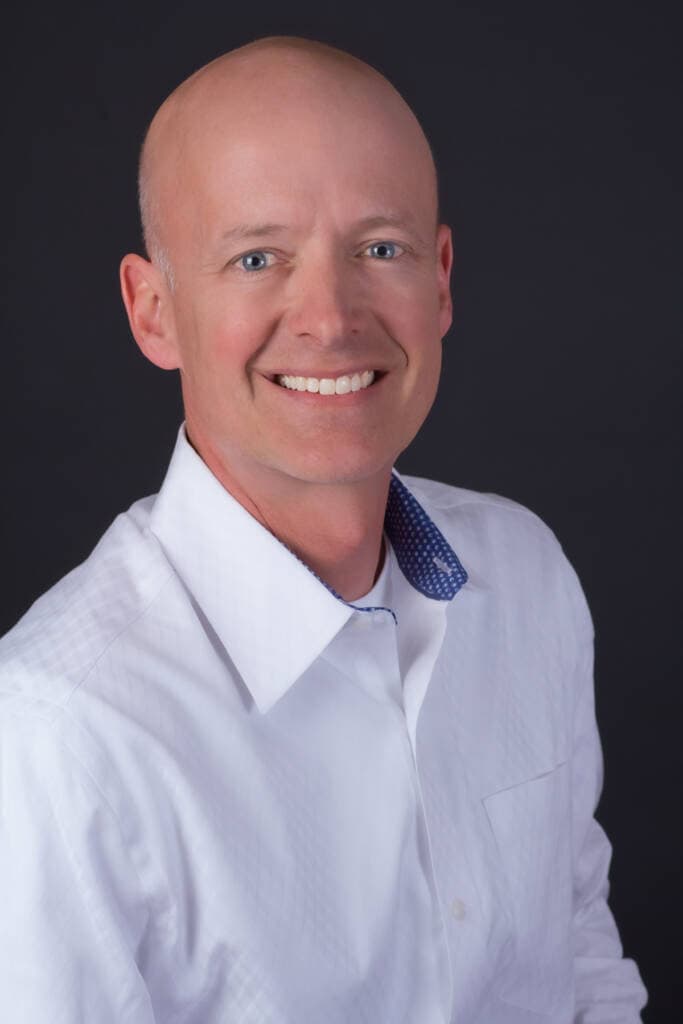
The institute moved closer to reality after discussions Schlude had with SJU and CSB President Brian Bruess early in 2023.
“l’ve taught at Cal-Berkeley, I’ve taught at Santa Clara and I’ve taught at Duquesne,” Schlude said. “But one of the things I like best about being at Saint John’s and Saint Ben’s is that it’s a place where if you want to launch a project, you have the ability to get people in a room and work together. That doesn’t happen everywhere else. There are schools where it’s frowned upon if you even email the president. But this is a place where Brian wants to talk with you.
“So we were discussing CSB and SJU, and some of the critical decisions we were making at the time. I told him I wasn’t there to talk about academic program prioritization. I knew he already had all the information he needed for whatever decisions he was going to make. But I wanted to talk about what came next – five, 10, 15, even 20 years beyond. And so, it was in the context of that conversation that he asked if I had any good ideas. It was one of those questions where I was embarrassed not to have a good answer in that moment.”
Instead, Schlude asked for time to think. The more he deliberated on the role of humanities in the ever-changing landscape of modern higher education, the more the concept of an on-campus institute made sense.
“When we think about the direction of education in the future, we see a lot of attention – and rightly so – is being paid to the STEM (science, technology, engineering and math) fields,” he said. “Those are such valuable areas, and areas our students are pursuing with excellence. That’s awesome, and I love my colleagues in these different areas who are doing such valuable work.
“But we want humanities to be part of that process as well. That’s part of what’s always made these places so special. We want students to come here and pursue careers in science, business and technology. But we don’t want them to receive a narrow education because they aren’t only going to be called upon to engage with specific problems in these fields. It’s a bigger world than that. And they need to be equipped with imagination and creativity.
“A well-rounded liberal arts education is one of the best ways to develop the imagination and creativity all our students are going to need to be leaders in the future.”
With encouragement from the president and SJU and CSB Provost Richard Ice, Schlude drew up a concept paper and shared it with both. That led to the establishment of a development team made up of Schlude, English professor Rachel Marston, Hispanic studies department chair Bruce Campbell and theology professor Kristin Colberg, which began its work in the spring of 2024.
The group spent that spring and summer collecting ideas on potential programming, resources and process, as well as meeting with administrative leadership, including the vice presidents for institutional advancement on both campuses, in an effort to assess feasibility.
The members also toured the renowned Center for the Humanities at the University of Wisconsin in Madison to gain more insight into how such an endeavor could look.
The group then began the formal development process – surveying departments and academic programs and meeting with department chairs, program directors and other members of the faculty and staff community.
That led to the establishment of five program initiatives:
- Interdisciplinary team-taught seminars
- A public humanities fellows program for students
- A Humanities Lab for faculty and staff
- A Big Ideas from Small Spaces event series
- A Great World Literature series
“When Jason first approached me, I was both excited and skeptical,” Marston said. “I was excited about the idea of creating something that would draw more attention to the humanities and the great work being done in all of these departments on campus, as well as adding new ways to better serve our students.
“But I also knew for something like this to go forward, it needs to meet certain levels of commitment. It’s easy enough to have big ideas. But I’ve been part of enough processes that got started, then didn’t have enough support to continue. It takes time for something like this to unfold and you need to have buy-in from the administration and donors.”
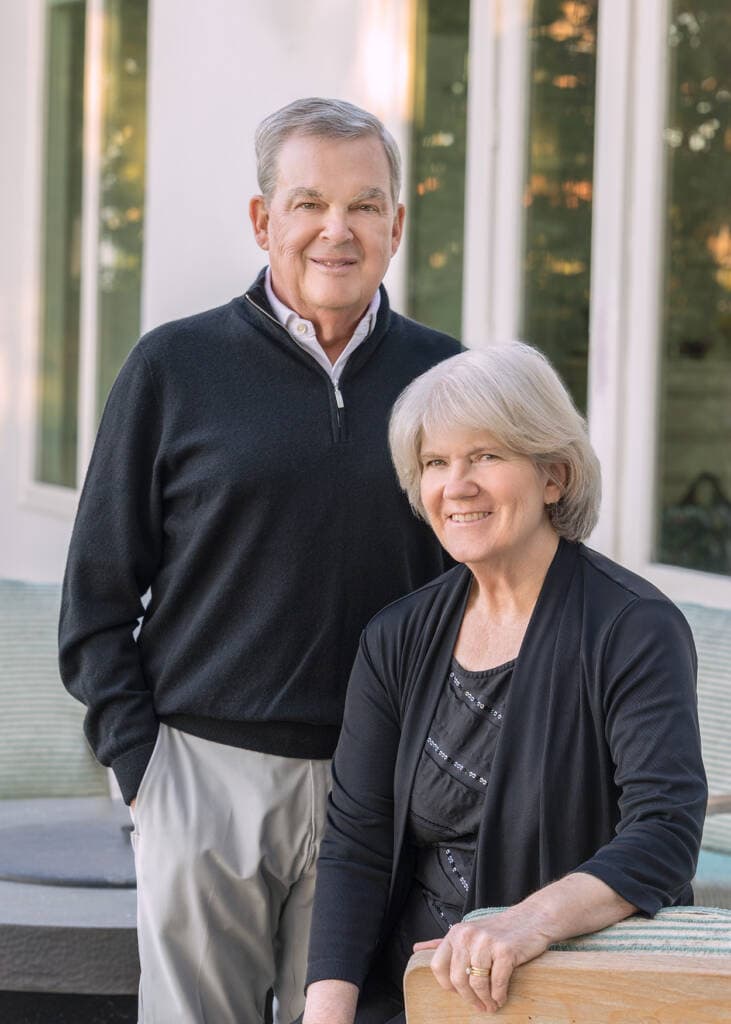
That buy-in was demonstrated during conversations and consultations with interested alumni, which led to a significant lead gift from Steve Halverson ’76 and his wife, Diane, who made their commitment in honor of their friend and Steve’s mentor, Fr. Rene McGraw, OSB, ’58, SOT ’62, a longtime philosophy professor and a great champion of the humanities and the liberal arts.
Pelfrey also is planning to co-fund the Humanities Institute with Halverson. In addition, he will also continue working with Schlude as an advisor and strategist for the Seminars for Life.
“A big part of all these conversations we were having were things we all value in terms of the humanities.” Schlude said. “Approaches that we see as being critical for students to have access to.
“We all want these schools to do big things. And I believe we can rival any of the best liberal arts colleges in this state, and I’d even say in this country. We already have a lot of the pieces in place to do that. But it doesn’t happen overnight. You have to have a long-term vision in place to build toward. And to do that, you need the administrative and financial support we’ve received.”
From Vision to Reality
Now the time has come to start making things happen, starting with the pilot launch of the Humanities Lab this spring.
Schlude and Campbell will serve as coordinators while professors Marston, Matt Lindstrom (political science), Louis Johnston (economics), Rachel Melis (art), Erica Stonestreet (philosophy), Kara Scheck (health sciences and data literacy librarian) and Trisa Schaffer (Office of Undergraduate Research and Scholars) will also be involved.
The spring of 2027 will see the launch of a pair of seminar classes: The Price of Liberty, co-taught by Schlude and Lindstrom, and The Good Life, co-taught by Johnston and Stonestreet.
Meanwhile, Campbell and Melis will continue work on developing a Public Humanities seminar. Marston is working on the Great Books seminar while Scheck and Schaeffer will work with faculty in the initial lab cohort to establish the public humanities fellows program for students.
Future Humanities Lab cohorts will develop additional interdisciplinary seminars and projects, including a Grand Strategy seminar.
“Higher education tends to be organized administratively in a way that tends toward compartmentalization and separation of different departments,” Campbell said. “But part of the liberal arts tradition is finding ways to break out of that and encourage collaborations across disciplines, especially because the questions and issues our students will have to face in the future aren’t going to be able to be compartmentalized.
“This is about finding different ways to organize and support work our faculty and students are already doing and finding ways to improve and enhance it in a changing educational landscape.”
Down the line, plans are expected to include the establishment of a physical home for the institute, perhaps inside the Dietrich Reinhart Learning Commons on the SJU campus, as well as the hiring of a faculty director and staff to plan on-campus programming and provide resources for students looking for internships and jobs in fields that connect to the humanities.
“We want to be thinking about the full pipeline,” Schlude said.
“We want to find ways to reach prospective students and show them the special opportunities they will have here at Saint John’s and Saint Ben’s. Then we want to support them while they’re here by providing them access to resources – including internships and different career opportunities.
“But we also want to make sure we’re supporting them in their first steps beyond these schools. That they have a deep and meaningful and versatile humanities education, as well as experience that already demonstrates how it can translate into future careers to prospective employers. Because the kinds of skills we’re developing are the kind of skills employers want. They want creative thinkers, they want people who can effectively communicate with others, they want problem solvers, individuals who are open-minded and empathetic to the other human beings they work with.
“The humanities are critical for all of that,” Schlude continued. “They are central to what we do and this institute will reflect that.”
Filling a Need
That’s all music to the ears of students like Whiting and Brady McElroy ’27. McElroy is a junior history major minoring in ancient Mediterranean studies. He’s part of the Fighting Saints ROTC program on campus and is involved in Outdoor U and various theater productions.
The aspiring future history professor and Maryland native said the institutions’ commitment to the humanities played a big role in his decision to come halfway across the country to attend college at SJU.
“They don’t want students who just check boxes here,” he said.
“This is a place that is looking to turn out people who experience a wide array of opportunities during their time on campus and come out the other side a more complete person.”
He said establishing a Humanities Institute will only enhance that mission.
“Hopefully, it makes the humanities even more accessible to everyone and shows them all the opportunities that exist in these areas,” he said. “l think it’s going to provide a lot more experiences for students who are driven by their desire to learn.”
Whiting, who hopes to pursue a master’s degree after graduation and eventually work in Washington, D.C., said the Humanities Institute will also shine a needed spotlight on all the great work in the humanities that has and continues to be done at the two schools.
“There are so many alums who have taken the background they received in the humanities here and gone on to do great things,” she said. “All you have to do is look at the list of Truman and Rhodes Scholars that have come through these schools and have taken humanities courses. Then there are all the humanities majors who have gone on to amazing careers and done big things.
“Hopefully, this institute will help connect all that history to the students on campus today.”